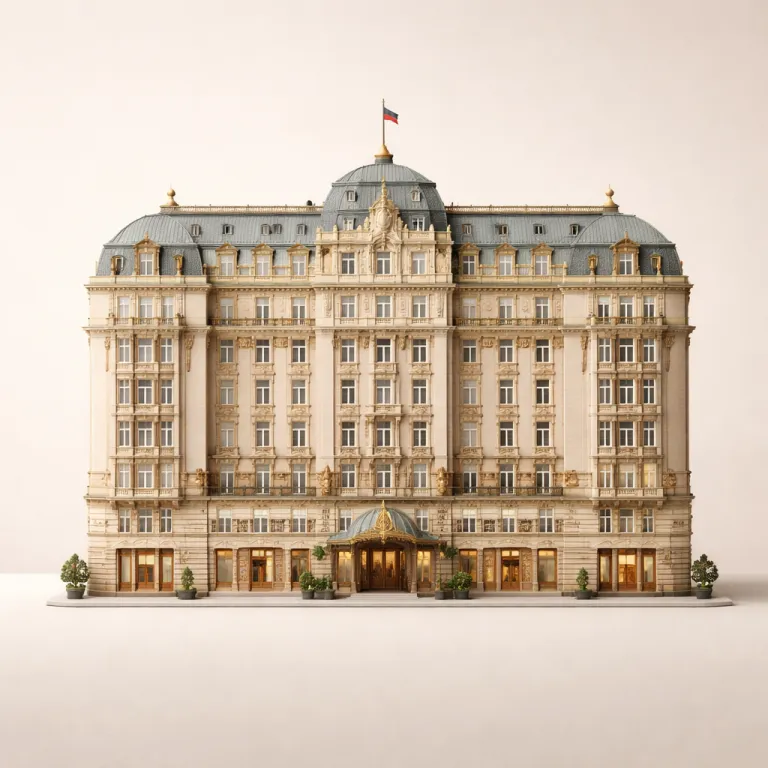
Frankfurt’s Grandhotel Hessischer Hof Returns as a Taj Hessischer Flagship
The reopening of the Grandhotel Hessischer Hof in Frankfurt under Indian Hotels Company Limited (IHCL) marks a decisive moment for Germany’s contemporary luxury scene. In a city dominated by efficient business hotels, Frankfurt has long lacked a true grand dame property that could match its status as a financial center, and the return of this five star Germany hotel under the Taj brand directly addresses that gap. For mygermanystay.com readers tracking the evolution of luxury hotels Frankfurt wide, this is the clearest signal yet that international hotels company groups now view Frankfurt hotel demand as structurally strong rather than cyclical.
The property stands on Friedrich Ebert Anlage opposite the Messe and Festhalle, and this location near the trade fair center means the hotel will again become a default address for C‑suite travelers who want to walk to major events. The existing Grandhotel Hessischer Hof building, privately owned by the House of Hesse, retains its role as a heritage hof while the refurbishment will layer in Taj’s contemporary interpretation of service, wellness and technology without erasing the Hessischer character. For Germany based guests used to efficient but anonymous hotels brand options, the return of this property as a fully serviced Taj Hessischer address signals a shift toward more personality driven luxury.
IHCL’s move into this Germany hotel market is also strategic when viewed against the national pipeline of 147 projects and more than 25,000 rooms, which makes Germany one of Europe’s most active development markets and intensifies competition among international hotels company portfolios. Industry data from Lodging Econometrics and STR has consistently placed Germany near the top of the regional rankings for hotel construction, and IHCL’s own press communications have highlighted Frankfurt as a priority gateway city for the Taj portfolio. By choosing Frankfurt rather than Berlin or Munich for this flagship reopening, Indian Hotels is aligning the Taj brand with the country’s deal making core rather than its leisure coastlines, and that choice will resonate with business leisure travelers who extend stays into weekends. For readers comparing global openings from Asia to Europe, this move sits alongside other high impact repositionings we track in our coverage of immersive luxury stays, such as the rainforest lodge transformations highlighted in our guide to Queensland’s finest rainforest escapes.
Refurbishment, Rooms and the Quiet Power of Jimmy’s Bar
The refurbishment completed at the Grandhotel Hessischer Hof is not a cosmetic refresh but a structural recalibration of how a Frankfurt hotel can feel for high frequency travelers. Across the 121 rooms and suites, the refurbishment will preserve antique pieces and original art while introducing better acoustic insulation, more intuitive lighting and discreetly integrated technology that keeps surfaces visually free of clutter. Guests who knew the existing property will notice that room layouts remain generous by Germany standards, with separate seating areas that make it easier to work, host short meetings or decompress between Messe appointments.
Public spaces have been treated with similar care, and the most symbolic decision is the preservation of Jimmy’s Bar almost unchanged as a living archive of Frankfurt nightlife. In a city where many hotels Frankfurt wide have chased rooftop concepts and neon heavy lounges, keeping Jimmy’s as a low lit, wood paneled refuge is a deliberate act of resistance that anchors the highlights hotel narrative in continuity rather than novelty. As one long time regular and Frankfurt based hospitality consultant notes, “If you change Jimmy’s too much, you lose the soul of the house. Keeping the bar’s atmosphere intact tells loyal guests that the Grandhotel Hessischer Hof under Taj is evolving, not erasing its past.” The bar’s role as a meeting point for bankers, artists and visiting dignitaries means the hotel will again function as a social center, and that sense of continuity matters in a market where so many Germany hotel openings feel interchangeable.
Elsewhere in the building, dining has been rethought to reflect both Taj’s culinary heritage and local expectations for restrained, product driven cuisine. The main dining room will balance Indian signatures with Central European classics, while in room dining is being elevated for guests who treat their rooms as private offices and need reliable, fast service at irregular hours. For design focused readers interested in how international brands interpret German heritage, the way this refurbishment balances period architecture with contemporary comfort sits in the same conversation as the Bauhaus informed properties we mapped in our feature on Germany’s Bauhaus hotels where design history checks you in.
What the Taj Brand Means for Germany’s Luxury Hotel Landscape
For Germany based travelers, the arrival of Taj at Friedrich Ebert Anlage is more than a logo change on the façade. The hotel will bring a service culture shaped in Mumbai and refined across Indian Hotels properties from London to Cape Town, and that means a different rhythm of attention in the lobby, at the concierge desk and in every room. Where many international hotels brand operations in Germany lean on standardized training, Taj’s approach tends to empower staff to make small, unscripted gestures that turn a stay into a relationship rather than a transaction.
This matters in Frankfurt, where the competitive set includes Roomers with its nightlife driven positioning, the classicist Sofitel Opera and the now reimagined Villa Kennedy, each targeting slightly different segments of the same high yield audience. Against that backdrop, the Grandhotel Hessischer Hof under Taj stewardship positions itself as a heritage led, service intensive property that can host board meetings in its salons, offer quiet rooms facing the inner hof and still feel relaxed enough for extended leisure stays. For business leisure travelers who book via platforms like mygermanystay.com, the combination of a central address near the Messe center, a preserved Jimmy’s Bar and Taj’s hospitality DNA creates a compelling alternative to more anonymous chain hotels.
From a market perspective, the move also underlines how international hotels company groups now view Germany not just as a feeder market but as a stage for their most emblematic properties. As one internal briefing on the property notes, “Spa, fine dining, event spaces,” and that triad captures how the Grandhotel Hessischer is expected to function as both a city hotel and a destination in its own right. For readers planning multi stop itineraries across the country, this Frankfurt anchor pairs naturally with the curated selection of upscale addresses we profile in our guide to upscale hotels in Germany with excellence, perks and exclusive offers, creating a coherent narrative of how luxury travel in Germany is evolving.